
Donesh Olyaie — Brand Strategy & Marketing Leadership
Donesh Olyaie*
Currently Brand Director, Petlibro {{ availabilityLine }}
Brand strategy · Marketing leadership · Los Angeles

I find the why behind the what.

Fifteen years of brand strategy, go-to-market and integrated campaigns for companies operating in categories where the rules are written (or unwritten) — and more than one person gets a vote.

Start a conversation The résumé
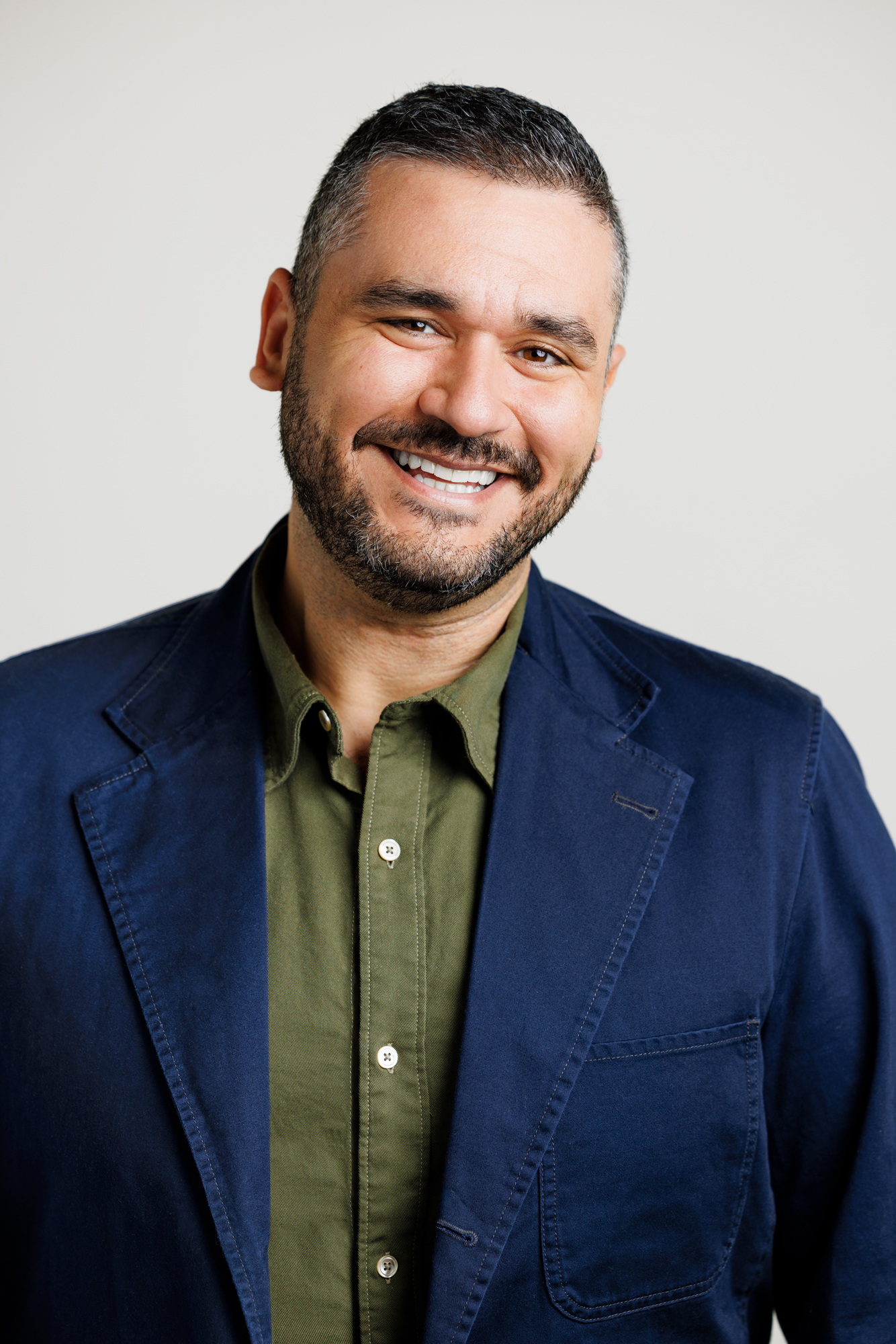
Portrait of Donesh Olyaie in a navy jacket and olive shirt against a pale grey ground
The—why—behind—the—what
Strategy, positioning and go-to-market for brands that have outgrown their own story.
An empty modernist interior: a white diagonal stair against a ribbon window, oxblood floor, single column
Perspective
Essay 01 · The category

Why Are Marketers So Bad at Marketing?

Holding companies are the most fluent marketers alive and the least convincing. They can explain brand equity to a client on Monday and quietly delete it from their own operating plan on Tuesday. Nobody argues more persuasively for long-term brand investment, and nobody abandons it faster when a quarter gets tight.

The fundamentals they sell are the first things cut: distinctiveness, consistency, a real reason to believe, enough share of voice to be noticed by someone who isn’t already a customer. What replaces them is a story told to analysts — consolidation, efficiency, principal media, an artificial-intelligence narrative with a margin attached. It is a good story. It is not a marketing story.

Here is the irony that should keep the industry awake: the category designed to enshrine the power of marketing is the category most eager to forsake it. If the discipline works — and it does — then the businesses that sell it ought to be the best-marketed companies on earth. Instead they are functionally indistinguishable. Five networks, one deck, the same three abstract nouns on the cover, and a positioning that survives only until the next reorganization.

This is not hypocrisy. It is incentive. A holding company is not a marketing company; it is a financial structure that owns marketing companies, and financial structures are rewarded for predictability, not distinctiveness. Brand building is the one line item whose return arrives after the compensation committee has stopped watching.

The cost is not just reputational, it is evidentiary. Every time the industry declines to practice what it sells, it hands its clients the argument that marketing is discretionary. We are not losing the seat at the table to procurement or to consultancies. We are vacating it, politely, in advance.

So make the case where the case is actually decided: in the operating plan, not the awards entry. Defend a brand, not a billing. And be the proof.

A softly lit red sphere suspended against a red and dark green gradient field
A perfectly rendered object, floating, attached to nothing.
You cannot sell a belief you are unwilling to buy. The strongest proof of concept a marketing company can offer is itself. Right now that is the weakest slide in the pitch.
Essay 02 · Attention

It’s the Simple Stuff No One Seems to Be Comfortable Grasping

For part of my time as a marketing director at Keurig Dr Pepper, I also worked at Monsieur Marcel, a French market in Los Angeles. On paper it made no sense: a day spent on a multi-brand portfolio, an evening spent behind a counter explaining cheese to strangers. In practice it was the most useful marketing education I have had since business school, and considerably cheaper.

Nobody at a cheese counter asks for a brand. They ask what’s good. So you cut a sliver, hand it over, and tell them something true — the animal, the region, the season, the reason this wheel tastes different in March than it will in August. For about eight seconds they are somewhere else. Then they buy the cheese. Then they come back the following week and ask for you by name, which is the part no media plan has ever delivered for me.

That is the whole mechanism, and it is embarrassingly simple. A good story transports someone. Transportation earns trust. Trust builds a relationship, and relationships are the thing that compounds — not the sale, which is only the receipt.

Marketers trade in attention for a living and almost never ask the reciprocal question: what are we giving in exchange for it? We behave as though attention is owed to us because we bought the impression. It isn’t. Attention is a transaction, and most of our work enters it with nothing to trade — no story, no usefulness, no craft, no reason for a stranger to give up eight seconds of a finite life.

Two corrections, both free. Stop expecting attention; give someone something worth their time and they will hand it to you willingly. And stop believing your logo carries value on its own — it is a receipt for value already delivered, not a substitute for delivering it.

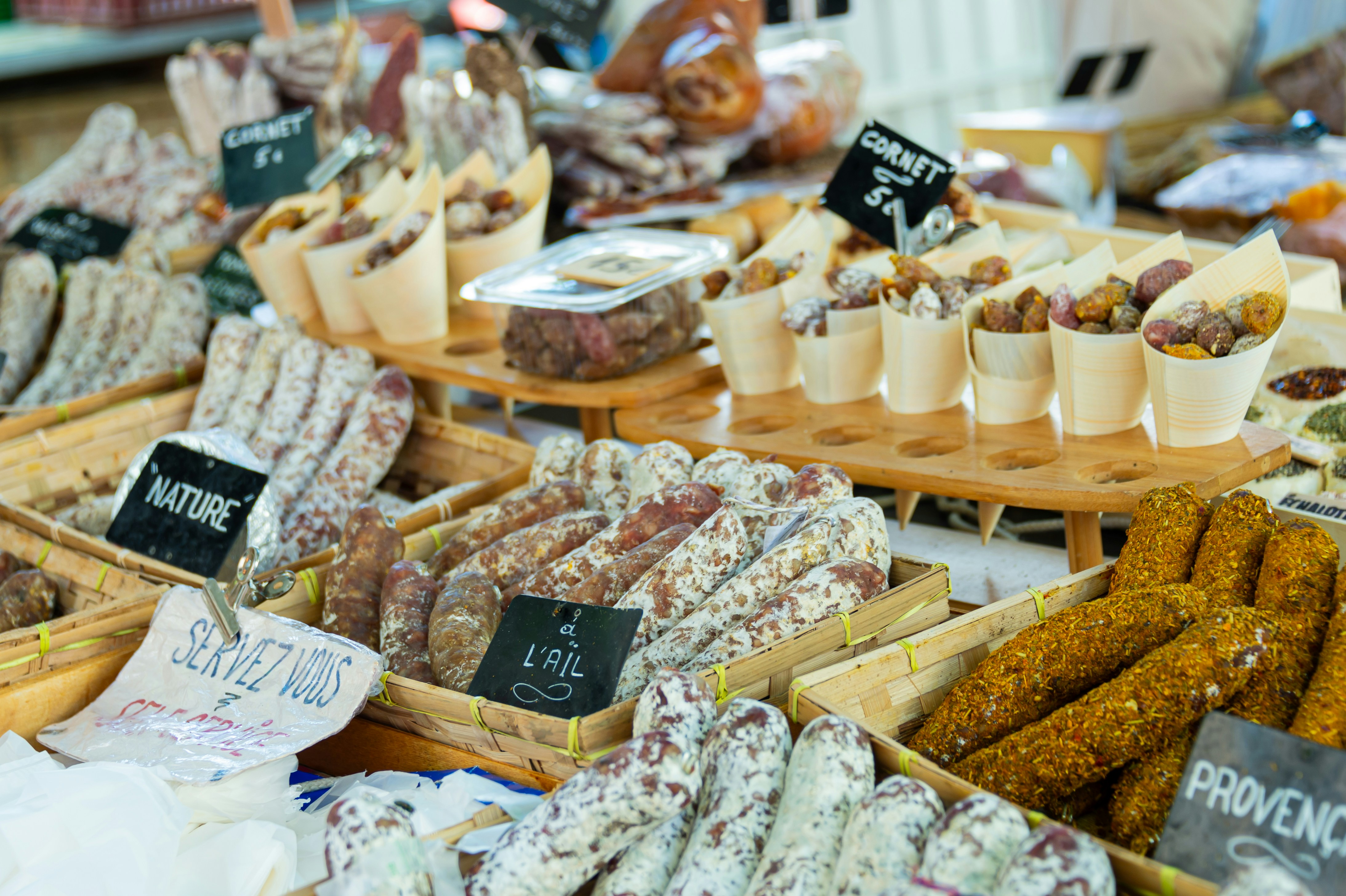
A French market counter stacked with saucisson in baskets and hand-chalked signs reading Nature, L’Ail and Servez Vous
Servez vous. The whole marketing theory, hand-chalked.
Stop expecting free attention. Give someone something worth their time.
Your logo does not have value. It is a receipt for value.
Essay 03 · Presence

Jeopardy in Covid Is the Chillest

I have competed on Jeopardy three times. The first was during Covid, which means my introduction to the most examined trivia stage in the world came with no studio audience, a great deal of plexiglass, and a green room where everyone stood six feet apart pretending to be relaxed.

The weeks before were worse than the taping. Quarantine has a particular way of amplifying whatever you are already anxious about, and I was anxious about preparing for something fundamentally unpreparable. You cannot study for Jeopardy. You can review, you can drill categories, you can practice the buzzer on a ballpoint pen — and none of it touches the actual variable, which is what three strangers happen to know at the same instant.

So I stopped. Standing behind the podium, with nobody in the seats and no way to influence a single clue that was about to appear, I made the only decision available: breathe into the moment, breathe out the expectations. Not a mantra. A logistics decision. Expectation was the only thing in the room I actually controlled, so it was the only thing I could afford to put down.

What arrived instead was presence, and behind it something closer to gratitude — the recognition that in a year when almost everything had been canceled, I was being handed a strange, slightly absurd gift. I was loose. I was fast. I was having, improbably, a very good time.

I won. I am not going to pretend that presence is a system for winning game shows, because it isn’t. But it is the only strategy that remains when the outcome is not yours to manage, and I have since watched it work in rooms with considerably more money on the line than a Daily Double.

Donesh Olyaie on the Jeopardy! set, mid-conversation with host Ken Jennings at the podium
On set, mid-interview. The plexiglass is just out of frame.
Breathe into the moment. Breathe out the expectations. When you cannot control the outcome, presence is the whole strategy. It works more often than it has any right to.
Speaking & Writing

Published, quoted, and occasionally handed a microphone.

Criticism, strategy commentary and keynotes — for trade press, conference stages and internal audiences who have heard every deck before.

Invite me to speak
Publications
Theatre Magazine Criticism
Native Strategies Magazine Essay
Media & Interviews
AdForum Interview
AdWeek Interview
Speaking Engagements
Out and Equal Conference
Universal Parks and Resorts Corporate
Keurig Dr Pepper Corporate
Kia Motors Corporate
About

A dramaturg who learned to read a P&L.

Fifteen years leading brand strategy and $100MM+ marketing portfolios in categories where the rules are written (or unwritten) and more than one person gets a vote — consumer healthcare, financial services, spirits, defense, automotive, entertainment, QSR and CPG. I build challenger positioning inside incumbent businesses, and I genuinely like the constraint.

I trained as a critic before I trained as a marketer, which mostly means I am suspicious of anything that sounds good and cannot be evidenced. The method does not change: read everything, watch what people actually do, then say the uncomfortable thing out loud before someone else has to.

Agency and client-side, in-house builds and holding-company pitches, and — for three tapings — a podium on Jeopardy.

Complex stakeholders Go-to-market In-house build-outs Portfolio positioning Creator & social
Most brand problems are company problems wearing a nicer coat. A beautiful content strategy does not hide an ugly company truth.
Experience
Agency & client-side · 2014 —
Brand Director
Petlibro
Brand strategy, portfolio positioning and go-to-market for a global pet-tech company, reporting to the CEO. Built the organic social strategy, creator program and measurement framework from nothing, then hired the team to run them.
2026 —
Head of Strategy
MullenLowe US · New York, Boston & Los Angeles
$100MM+ across defense, financial services, CPG, consumer healthcare, QSR and spirits. Worked across the New York, Boston and Los Angeles offices, and led holding-company-level RFPs worth $500MM+ combined as a MullenLowe global representative.
2024 – 2026
Director, Marketing
Keurig Dr Pepper
Introduced and scaled the in-house marketing function for a multi-brand portfolio, and co-chaired the company’s data transformation task force — the group that had to prove what the marketing was doing.
2021 – 2024
EVP / Group Planning Director
Deutsch Los Angeles
Nintendo, Keurig Dr Pepper, Lowe’s, PetSmart, Georgia Pacific, Bayer and the California Milk Advisory Board.
2020 – 2021
Group Planning Director
David&Goliath
Kia, Acura, Universal Studios, the U.S. Department of the Interior, Jack in the Box, Coca-Cola Emerging Brands, E&J Gallo Spirits and LG Mobile.
2014 – 2020
Education
MBA, with distinction
Ross School of Business, University of Michigan
MFA, Dramatic Criticism
Yale University
BA, Political Science & Theatre
University of Southern California
Also on the record
Jeopardy! champion IPG Rise Committee Chair KDP Data Transformation Co-Chair AdColor Entrepreneurship Mentor KDP LGBTQ+ ERG Mentor
Full career detail, client list and references available on request.
Ways to work together

{{ availabilityHeadline }}

Five ways I work with people outside my day job. The first conversation is short, specific and free — tell me the problem, not the brief.

Start a conversation
01 Fractional & interim leadership Senior brand or strategy leadership on a defined engagement — while you hire, restructure, or work out what the role actually needs to be.
02 Board & advisory Standing counsel for founders and boards on brand, category strategy, and the marketing questions investors keep asking.
03 Strategic consulting Positioning, portfolio architecture, go-to-market and launch strategy — scoped as a project with a decision at the end of it.
04 Guest speaking Keynotes, panels, internal summits and workshops on culture, attention and building brands inside complicated businesses.
05 Freelance support Extra strategic horsepower for a pitch, a planning cycle or a deadline that arrived early. Senior hands, no onboarding tax.
Get in touch

Tell me the thing you can’t say in the all-hands.

Recruiting, speaking, consulting or something harder to categorize — the form goes straight to me. I answer everything that isn’t a pitch for backlinks.

Los Angeles, CA Open to relocation Remote / hybrid
A red push-button desk telephone with a pink coiled cord, sitting on a wooden crate at a flea market
Wait for dial tone.
Send message No address or phone published. Nothing shared, ever.